The Ultimate Showdown: Sony Inzone M9 Ii vs Msi Summit Ms321Up for 2026
The monitor market in 2026 continues to blur the lines between gaming-grade speed and professional-grade color fidelity. Two products that represent those competing priorities are the Sony Inzone M9 II and the Msi Summit Ms321Up. One leans into immersive gaming features and fast, responsive panels; the other emphasizes a large-format workspace, color accuracy, and connectivity for creators and business users. This article examines both monitors in depth, evaluates real-world use cases, compares important attributes side-by-side, and offers a practical buying guide to help readers decide which display best suits their needs.
At a glance: who each monitor is for
Sony Inzone M9 II — Best for gamers and hybrid users who want high-refresh, low-latency performance combined with good HDR and polish. It is aimed at competitive and immersive single-player gamers who also sometimes edit photos or video and want a visually striking display.
Msi Summit Ms321Up — Best for professionals, content creators, and multitaskers who prioritize a large workspace, accurate colors, and extensive connectivity. It targets users who spend long hours on documents, spreadsheets, photo/video editing, and conferencing, and who value ergonomics and screen real estate over ultra-high refresh rates.
Detailed product analysis
Sony Inzone M9 II — Gaming-first, polished experience
The Sony Inzone line established itself on the promise of marrying console-focused features with PC gaming performance; the M9 II continues that evolution. In real-world use, it attracts gamers who value smooth gameplay, quick response, and impactful HDR highlights. The monitor’s design language and on-screen menus are tuned for ease of use during gaming sessions while offering features that crossover to media consumption and casual creative work.
Key strengths in day-to-day use include responsive performance for fast-paced titles, low input lag for competitive play, and an HDR implementation designed to make highlights pop in supported games and movies. Gamers will appreciate gaming presets, crosshair overlays, and built-in calibration options that make it simple to switch profiles for different genres. For streamers and creators who also play, the monitor’s color and contrast can be tweaked for reasonable editing workflows, though high-end color-critical work will still favor dedicated professional panels.
Practical limitations to note: while the M9 II prioritizes speed, buyers should verify its suitability for long-form color work if color-critical tasks are frequent. Some users who expect extremely wide color gamut beyond the standard professional ranges may prefer a different class of monitor. Additionally, the typical gaming-oriented stand and ergonomics are often optimized around quick tilt/height adjustments rather than enterprise-level desk integration.
Msi Summit Ms321Up — Workspace and color-focused
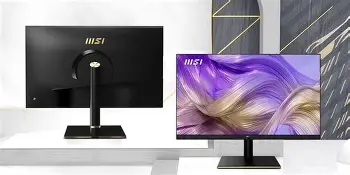
The Msi Summit Ms321Up is crafted for productivity and creative work. A larger screen and emphasis on color fidelity make it appealing to photographers, video editors, designers, and remote professionals who rely on accurate previews and generous real estate for timelines and multi-window workflows. Its built-in features typically include factory color calibration, wide-color support, and a connectivity suite designed to anchor a small desktop hub.
Shop the latest Electronics picks on Amazon.
View Offers →In common office and studio workflows, the Summit shines at allowing several windows to be visible simultaneously, reducing the need for dual-monitor setups. Conferencing and collaboration are also taken into account: integrated camera arrays or modular mount options, good built-in microphones, and comfortable ergonomics help make long calls less taxing. For creatives, the monitor’s color accuracy out of the box cuts down the time needed for manual profiling and provides predictable results when paired with calibrated laptops and graphics hardware.
Where it may not be the ideal choice is for competitive gamers who want sub-1ms response and 240Hz-class refresh. The Summit typically prioritizes fidelity over ultra-high refresh rates, so gamers who demand the fastest frame-to-frame performance may find it less suitable. Also, its larger footprint and desk presence are trade-offs for users with limited space.
Pros & Cons
Sony Inzone M9 II
- Pros: Low input lag and responsive performance for gaming; HDR highlights and punchy contrast; gamer-centric features and presets; compact footprint for high-refresh 27-ish class displays; good crossover as a media display.
- Cons: May not offer the absolute highest color accuracy for professional color grading out of the box; ergonomics and connectivity could favor gaming setups over desk-hub functionality; larger panels in the same family may be preferable for productivity.
Msi Summit Ms321Up
- Pros: Large workspace ideal for multitasking and timelines; factory-calibrated color accuracy and wide gamut options for creators; strong connectivity and ergonomics suited to office/studio desks; useful features for conferencing and productivity.
- Cons: Not optimized for ultra-high refresh competitive gaming; larger footprint requires more desk space; may be overkill for casual users who do not use color-critical applications.
Head-to-head comparison
| Sony Inzone M9 II | Msi Summit Ms321Up | |
|---|---|---|
| Intended use | High-performance gaming with media crossover | Professional productivity and color-critical creative work |
| Typical panel size | Compact to mid-size (commonly 27") | Large (commonly 32") |
| Refresh & responsiveness | High refresh and low input lag — prioritized | Moderate refresh — prioritized color/comfort over ultrafast refresh |
| Color & HDR | Vivid HDR-focused tuning; good out-of-the-box for gaming/media | Factory color calibration and wider gamut options for editing |
| Ergonomics | Adjustable for gaming setups; compact footprint | Robust adjustability, larger stand footprint, VESA options |
| Connectivity | Standard display ports, USB hub options geared to gaming peripherals | Extensive ports for docks, multiple inputs, and USB-C power/data |
| Built-in extras | Gamer-oriented overlays, presets, possibly dynamic lighting | Camera/mic options, KVM or USB-C docking features, calibration tools |
| Desk presence | Smaller footprint — better for single-monitor gaming desks | Larger footprint — designed as a central workstation display |
| Who should buy | Gamers who occasionally create content and want a visually impactful display | Professionals and creators who need a big, accurate workspace |
Real-world use cases
Case: competitive and immersive gamers
Gamers who play fast-paced shooters or fighting games will prioritize low input lag and high refresh. The Sony Inzone M9 II is a natural fit here: it provides snappy feel and visual clarity that helps in tracking motion and reacting. For those who stream, the monitor’s visuals also create an appealing picture for viewers.
Case: hybrid worker/streamer
Users who split time between gaming and creative tasks may prefer a monitor that balances both. The Inzone M9 II gives strong gaming performance while still allowing acceptable photo and video editing. Conversely, a creator who occasionally games might prefer the Summit for its accurate previewing of content, accepting lower refresh rates for a better editing experience.
Case: photo and video editing studio
Content professionals who need consistent color across devices will find the Msi Summit Ms321Up's calibration and larger panel very helpful. Multiple windows for timelines and reference images fit naturally on a 32" workspace, reducing context switching and speeding review iterations.
Case: remote office and video conferencing
For frequent video calls and desktop multitasking, the Summit’s ergonomic and connectivity features (like integrated camera options, USB-C docking, and better cable management) make it a more practical choice. The Inzone can handle calls, but the Summit is optimized for a sustained office environment.
Find top-rated Electronics products at great prices.
Browse Now →
Buying guide — what to consider before choosing
When deciding between these two displays, buyers should evaluate the following factors in the context of their daily workflows and priorities.
- Primary use case: If the main activity is competitive or fast-paced gaming, prioritize refresh rate, response time, and low input lag. If the main activity is creative work or multitasking, prioritize panel size, color accuracy, and connectivity.
- Workspace size: Measure the desk. A larger 32" monitor can replace dual 27" setups, but requires depth and width. Smaller desks benefit from a compact high-performance display.
- Color needs: For professional editing, factory calibration and coverage of wide gamuts (such as DCI-P3 or Adobe RGB) matter. Casual editors can often get by with gaming-focused panels if they calibrate with a colorimeter.
- Refresh vs. fidelity trade-off: High refresh rates make motion smoother and reduce perceived input lag; higher fidelity panels offer better static image quality and color. Determine which one affects daily productivity more.
- Connectivity and dockability: Check for USB-C with power delivery, multiple display inputs, downstream USB ports, and an integrated KVM if using multiple systems. Creators and hybrid workers will get more value from extensive I/O.
- Ergonomics and adjustability: Ensure the stand supports height, tilt, swivel, and pivot for multi-orientation work. VESA compatibility is essential for advanced arm solutions.
- Built-in features: Consider whether built-in speakers, mics, and cameras matter for conferencing, or whether external peripherals are already in use. Gaming overlays and presets may appeal to players; calibration utilities matter to creators.
- Futureproofing: Look for support for modern display standards and driver/software update practices. A monitor that can adapt via firmware/software to new workflows will last longer.
- Budget & total cost of ownership: Factor in extras like calibration devices, desk mounts, and cables. A lower initial price for a gaming monitor may require additional purchases to become a full workstation monitor and vice versa.
How to test a monitor in-store or on delivery
Before committing, test displays with tasks that match real use:
- For gaming: run fast-paced multiplayer matches or motion test videos; look for judder, ghosting, and input responsiveness.
- For creative work: open reference images and examine skin tones, neutral grays, and highlight roll-off; use sample video footage to verify banding and detail in shadows and highlights.
- For productivity: arrange multiple windows and simulate a typical workday — spreadsheets, video calls, and browser tabs — to ensure the workspace fits the workflow.
- Check ergonomics: adjust height and tilt; ensure the stand and cable routing meet preferences.
- Inspect for uniformity: examine black uniformity and backlight bleeding in dark scenes, and ensure there are no glaring dead pixels.
Final verdict
The choice between the Sony Inzone M9 II and the Msi Summit Ms321Up ultimately comes down to priorities. The Sony Inzone M9 II is the stronger pick for gamers who value responsiveness, vivid HDR moments, and a polished gaming experience that still supports media creation in a pinch. The Msi Summit Ms321Up is the sensible choice for professionals and creators who need a larger, color-accurate workspace, rich connectivity, and ergonomic features that support extended, productivity-focused sessions.
Buyers who split time between serious gaming and color-sensitive work will need to weigh which half of their workflow is more critical; some will favor the Inzone for performance with supplemental color calibration, while others will accept lower refresh in exchange for a predictable creative workspace from the Summit. Both lines reflect the broader trend in 2026: monitors are becoming specialized tools rather than one-size-fits-all appliances, so aligning purchase decisions with primary daily tasks remains the most reliable strategy for long-term satisfaction.