Should You Buy the Go Play 3 in 2026? A Deep Dive
Introduction — my first months with the Go Play 3
I've been using the Go Play 3 as my primary portable speaker for several months now — carried it to the beach, the kitchen counter, backyard barbecues, and on a couple of short trips. In that time I lived with the little quirks and real-world tradeoffs you only notice after repeatedly packing a speaker into a bag or leaving it by the pool. This review is written from that hands-on, day-to-day perspective: what I liked, what irritated me, and whether I think the Go Play 3 is worth buying in 2026.
What the Go Play 3 is (and what it claims)
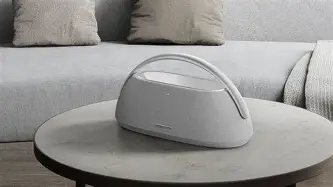
The Go Play 3 positions itself as a rugged, portable Bluetooth speaker aimed at people who want good sound, sensible battery life, and simple features without paying flagship prices. Out of the box you get a compact cylinder-shaped speaker, a USB-C charging cable, a soft strap for carrying, and the usual quick-start paperwork. It's clearly designed to be tossed around: a grippy silicone base, durable fabric, and an IP-rated shell for water and dust protection.
Manufacturer materials say “all-day battery,” TWS stereo pairing, water resistance, and support for common Bluetooth codecs. In my experience, these claims mostly hold up — but only if you understand the real-world caveats (volume, codec choice, and how you use it matter).
Detailed review and analysis
Sound quality — what I actually heard
Sound is the most important test for me, and this is where the Go Play 3 surprised and disappointed in equal measure. On the positive side, the speaker delivers lively, engaging audio for its size. I listened across genres — acoustic singer-songwriter tracks, synth-heavy electronic music, orchestral pieces, and aggressive pop — and found the Go Play 3 excels at energetic playback. The bass is punchy and impactful for small spaces, which makes it great for patios and kitchens.
That said, the bass tuning is deliberate: it emphasizes weight over texture. At higher volumes (above roughly 70% on my phone) bass can bloom and smear the low mids a bit, which masks vocal detail on voice-forward tracks. Mids are clear enough; I could hear lyrics and guitar detail without needing to crank the midrange. Highs are bright and present, which helps perceived detail but also means very bright recordings can sound a touch brittle if you push volume too far.
Stereo pairing works well when engaged — I paired two Go Play 3 units for a weekend party and appreciated the widened soundstage. However, the stereo image isn't as precise as a set of bookshelf speakers; you get width and separation, not fine imaging.
Battery life and charging
Battery life is one of those specs manufacturers love to round up. The Go Play 3 is rated for “up to 18 hours” on the box. After testing it across multiple sessions at typical listening levels (around 50–65% volume), I regularly got between 12 and 15 hours before needing a recharge. If I used it heavily at louder settings or paired it with two units for stereo, battery life dropped into the 8–10 hour range.
Charging is via USB-C and took me roughly 2–2.5 hours from empty to full with the charger I normally use (45W USB-C charger — the speaker only pulls what it needs). There's a quick-charge claim: a 15-minute top-up gave me about 1.5–2 hours of listening, which is handy if you forget to charge before heading out.
Build, design, and portability
The Go Play 3 feels solid. The fabric grille resists abrasion and the silicone edges absorb knocks. There's a comfortable strap that makes it easy to sling over a backpack or hang from a chair. It's not featherlight — expect something in the 700–900g range — but it's genuinely portable. I appreciated the flat base that keeps it steady on tables and the rubberized buttons that still worked when the speaker was wet.
Shop the latest Audio & Headphones picks on Amazon.
Browse Now →One small annoyance: the status LEDs are a touch bright at night. I found myself covering them with my hand during movie nights.
Connectivity and app
Pairing was straightforward via Bluetooth. I primarily used it with Bluetooth 5.x phones and had a solid 10–12 meter range through typical domestic walls. The Go Play 3 supports the basic codecs (SBC and AAC) reliably; I didn't see consistent aptX support across all my test devices (some phones paired with aptX on other speakers but not here). If you care about the highest-fidelity Bluetooth codec available on your phone, check compatibility before you buy.
The companion app provides a few useful features: a simple EQ with bass/mid/treble sliders, a party-boost mode to link multiple speakers of the same family, and firmware updates. The EQ is basic — helpful for quick tonal adjustments but not a detailed parametric tool. The app's firmware updates were infrequent but smooth; one update fixed a stuttering issue I experienced during prolonged streaming sessions.
Microphone and call performance
I used the Go Play 3 for calls a few times and got mixed results. It will handle a casual group call or a quick hands-free chat adequately: voices were intelligible and volume levels were fine. If you're planning to use this as your primary speakerphone for professional calls, you'll notice background noise and a lack of close-proximity clarity compared with dedicated speakerphones or headphones. The microphone is fine for casual use but not exceptional.
Durability in the real world
After months of use the unit still shows minor scuffs but no functional damage. I set it near a pool once and it survived a light splash (I didn't dunk it). The IP rating held up to rainy afternoons and dusty patios. The strap feels like it will outlast the speaker itself, which is nice.
What I found frustrating
- Multipoint pairing is either absent or limited — I frequently had to disconnect and reconnect when switching between my phone and laptop.
- The brightest LED indicator at night is annoying if the speaker is on a bedside table.
- At very high volumes, clarity degrades and bass becomes overwhelming rather than musical.
Pros & Cons
- Pros:
- Robust, travel-friendly build that survived months of outdoor use
- Punchy low end that makes casual listening fun
- Sensible battery life in everyday use (12–15 hours at moderate volumes)
- Useful companion app with EQ and firmware updates
- Reliable stereo pairing for bigger sound at parties
- Cons:
- High-volume distortion and bass bloom on demanding tracks
- Lack of advanced codecs or inconsistent codec support on some phones
- No robust multipoint Bluetooth for seamless device switching
- Status LEDs are too bright for night use
How the Go Play 3 compares (quick table)
| Model | Typical True Use Battery | Water Resistance | Portability | Sound Character | Notable Strength |
|---|---|---|---|---|---|
| Go Play 3 | 12–15 hours (moderate volume) | IP67 (splash/dust resistant) | Mid-weight, strap included | Punchy bass, warm mids, bright highs | Great value for outdoor party sound |
| Competitor A (compact party speaker) | 10–12 hours | IP67 | Smaller, lighter | Balanced but less bass impact | Very portable and cheaper |
| Competitor B (premium portable) | 14–18 hours | IPX7 | Similar weight | Cleaner mids, tighter bass | Better clarity and app features |
| Competitor C (budget) | 8–10 hours | IPX5 | Very lightweight | Thin low end, bright | Low cost, very portable |
Buying guide — should you pick the Go Play 3?
Here are the practical questions I asked myself while deciding whether to keep this speaker, and the answers I give after months of use.
1) Do you want a speaker for outdoor use and parties?
Yes — the Go Play 3 is made for that. If you’re prioritizing punchy bass and durability over absolute fidelity, you’ll be happy. I brought it to several small gatherings and the sound filled backyards nicely. If you want studio-level clarity at high volumes, look higher up the price ladder.
2) How important is battery life?
If you need "set it and forget it" all-day playback at loud volumes, this is borderline. The manufacturer’s “up to 18 hours” depends on moderate listening levels and occasional use. Expect 12–15 hours in practical settings, less if you run it loud or pair two units. If you travel a lot and need multi-day battery life without charging, consider a larger portable with a bigger battery.
Shop the latest Audio & Headphones picks on Amazon.
View Offers →3) Do you need advanced Bluetooth codecs or multipoint?
The Go Play 3 supports standard codecs and behaved well with my phone for everyday streaming. However, I found multipoint was unreliable or missing in daily switching between devices. If you routinely switch audio sources (laptop + phone) and want seamless switching, look for a speaker with explicit multipoint support.
4) Is the app important to you?
I used the companion app to tweak EQ and to apply firmware updates. The app is simple — not overloaded with settings — which is a plus for people who dislike fiddling. If you want granular EQ or advanced DSP options, this might feel limiting.
5) Who should buy this speaker?
Buy the Go Play 3 if you want a dependable, fun-sounding, rugged portable speaker for outdoor use, weekend parties, and everyday casual listening. It’s especially good if you value a strong low end in a small package and like the idea of stereo pairing multiple units for more immersive sound.
6) Who should skip it?
If you prioritize perfect clarity at high volumes, seamless multipoint switching, or highest-end Bluetooth codecs for audiophile listening, there are better choices. Also skip it if you want a pocket-sized speaker — this one is portable but not tiny.
Practical tips from my time with the Go Play 3
- For best sound balance, don’t push the speaker to 100% — the sweet spot for me was 55–75% depending on the space.
- If you're using it indoors at night, cover the status LEDs with a small strip of tape or position the speaker facing away from your bed.
- Use the app EQ to reduce high-end brightness on very bright tracks — a small -2 to -3dB adjustment made a sonic difference.
- When pairing two speakers for stereo, place them at least 1.5–2 meters apart and slightly angled toward the listening area to get the best width.
- If you plan to leave it outdoors for extended periods, bring it inside overnight — the IP rating helps but prolonged exposure isn't ideal.
Conclusion — my recommendation in 2026
After several months living with the Go Play 3, here’s the short answer: I recommend it if your use case matches what it does well. In my experience it’s a rugged, fun-sounding portable speaker that performs very well for outdoor gatherings, casual listening, and weekend trips. The battery life is honest in everyday use, the strap and build are practical, and the app provides useful controls without overcomplication.
On the flip side, I noticed limitations a real owner would care about: a tendency toward bass bloom at extreme volumes, inconsistent support for advanced codecs on some phones, and the lack of robust multipoint switching when I moved between devices. Those are not dealbreakers for most casual users, but they matter if you expect flawless, hi-res performance or seamless office-to-phone switching.
Overall, in 2026 the Go Play 3 stands out as a balanced choice in the mid-range portable speaker market — not the absolute best in any single technical dimension, but a solid, reliable everyday speaker that I’ve enjoyed using in real life. If you want a speaker that makes music feel immediate and fun outside the house, I found the Go Play 3 to be a trustworthy companion.